
The tote-bag economy
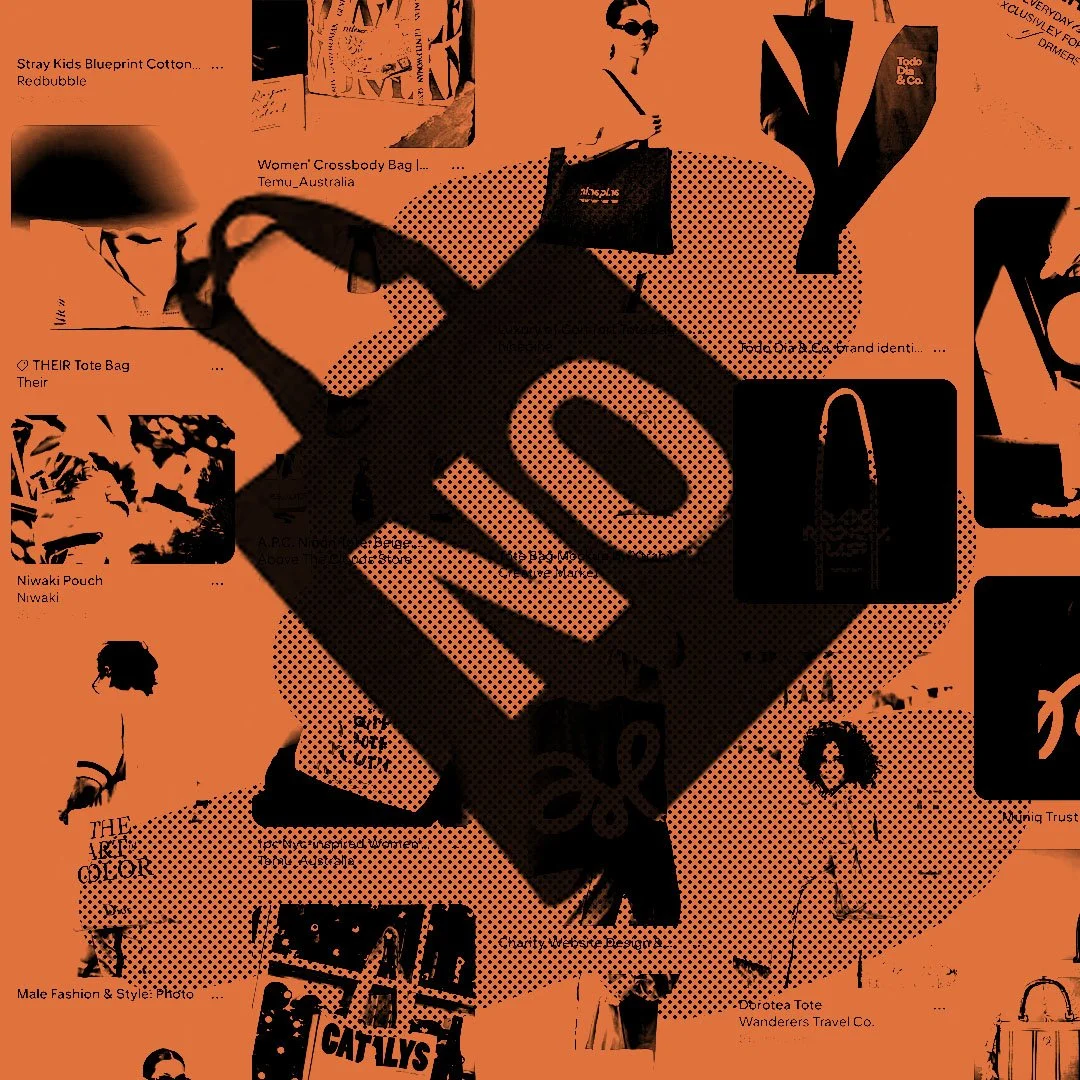
The global tote-bag market was worth $2.75 billion in 2025. Sit with that for a moment, because it is not a number that behaves the way you might expect it to for an object everyone already owns too many of...an object, in fact, that has become something of a cultural punchline precisely because of how freely it circulates. Promotional giveaways, reusable grocery stand-ins, conference swag, bookshop merchandise: the tote bag is everywhere, and our cupboards confirm it. Which makes the figure more interesting, not less. When a market grows around something nobody claims to need, something else is usually going on.
What is going on, I think, is that the tote bag has quietly assumed the cultural role that the concert T-shirt once held...a wearable record of where you were, what you cared about, which world you moved through. The concert T-shirt said: I was in the room. The tote bag, carried through a city on an ordinary Tuesday, says something similar, except the rooms have multiplied. A gallery, a publisher, a restaurant group, an independent roaster. Every handle-hold is a small act of curation, a fragment of a self-portrait assembled over time. We are not accumulating tote bags. We are accumulating souvenirs.
“The tote bag has quietly assumed the cultural role that the concert T-shirt once held...a wearable record of where you were, what you cared about, which world you moved through.”
For brands, this shift is worth attending to carefully. The tote represents something rare in the economy of objects: a genuinely low-friction entry point into brand ownership. It is not a purchase that requires deliberation. The price is right, the utility is real, and the act of carrying it is inherently social...a mobile, elected billboard. When the design is strong enough to be desirable rather than merely functional, the bag works even harder. It moves through the world as a kind of endorsement, and endorsements carried willingly are worth far more than impressions served without consent.
What strikes me, though, is how rarely brands treat the tote with the same intentionality they bring to their primary collateral. It gets a logo drop and a neutral colourway, produced in bulk, distributed at events, forgotten. The opportunity that gets missed is the one the concert T-shirt always understood: that people will wear what they find beautiful, and that beauty...real, considered, executed with craft...is what converts a promotional item into something someone actually wants to own. The souvenir quality of the tote depends entirely on whether it carries enough of a brand's visual intelligence to be worth keeping.
The cupboard overflows not because we have too many tote bags, but because most of them are not quite good enough to make us choose. The ones we reach for, again and again, are the ones that feel like they came from somewhere...from a considered hand, a clear point of view, a brand that knew what it was doing when it made the thing. That is a design problem. Which is to say, it is a branding problem. And like most branding problems, it turns out to be a question of whether someone cared enough to get it right.
