
Flex Appeal
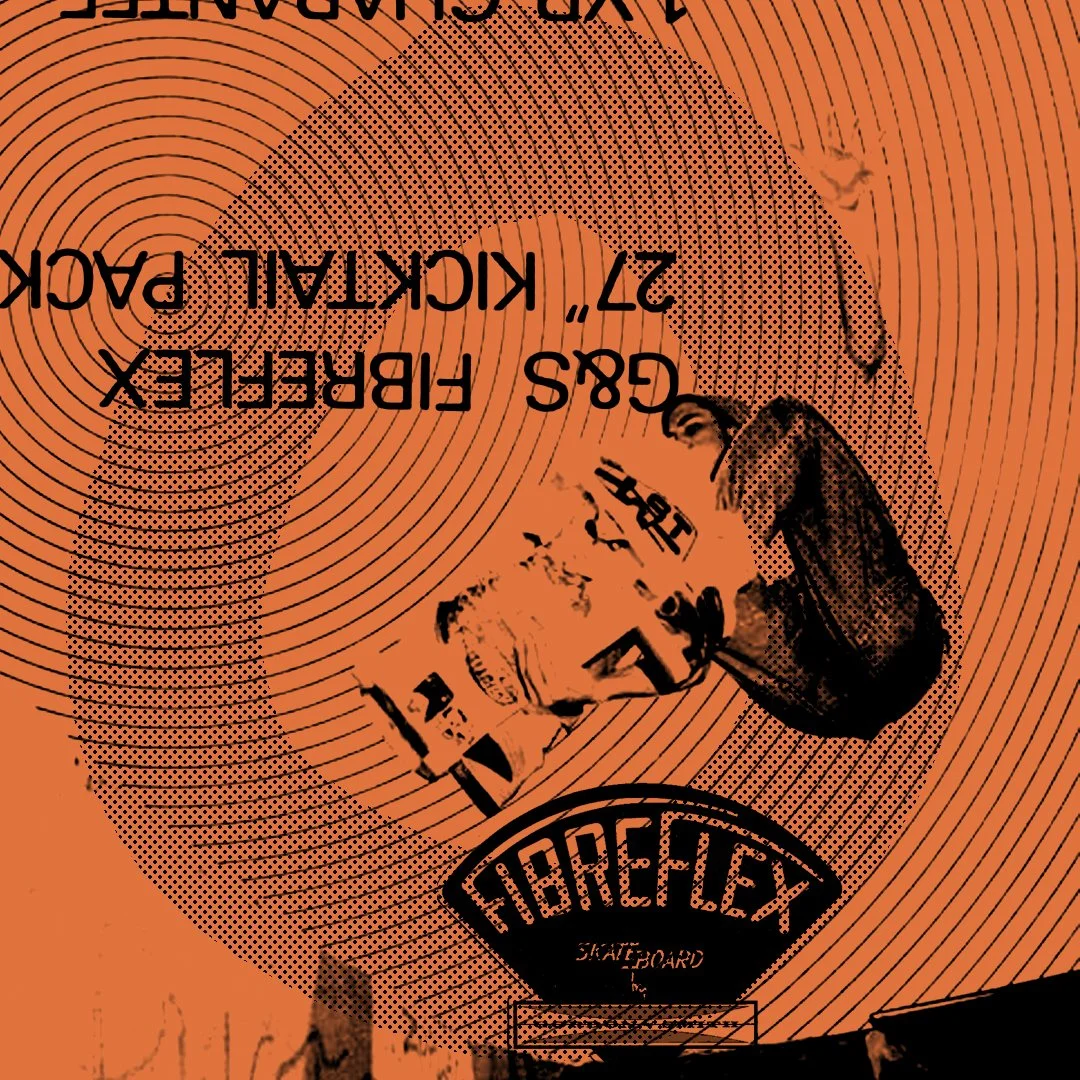
What a skateboard company that no longer exists can teach us about building culture before anyone is watching.
Stefan Ytterborn kept every board. Between 1975 and 1979, Fibreflex produced a run of skateboards that would help define what skateboarding looked like, felt like, and eventually meant…and Ytterborn, somehow, held onto all of them. Not a selection. Not a highlight reel. Every iteration, every model, across four years of a culture building itself in real time.
That kind of collection is unusual. Most objects get used, lost, or discarded. The ones that survive tend to do so by accident rather than intention. But a complete sequential collection is something else — it's an argument. It says: this mattered before anyone said it did.
The boards weren't preserved because they were valuable. They were preserved because someone understood they would be.
Fibreflex was operating in California in the late 1970s, when skateboarding was still a culture in formation. There were no mainstream templates to follow, no market data to consult, no precedent for what a skateboard brand was supposed to look like or communicate. What existed was a community of people building things — boards, tricks, aesthetics, identities — without knowing what it would eventually become.
“The boards weren’t preserved because they were valuable. They were preserved because someone understood they would be.”
That unknowing is significant. It's easy to build something coherent when you can see the destination. When there's a market, a consumer, a category. Harder, and more interesting, to build something that holds together before any of that exists. Fibreflex did it anyway…not because they knew what skateboarding would become, but because they were paying attention to what it already was.
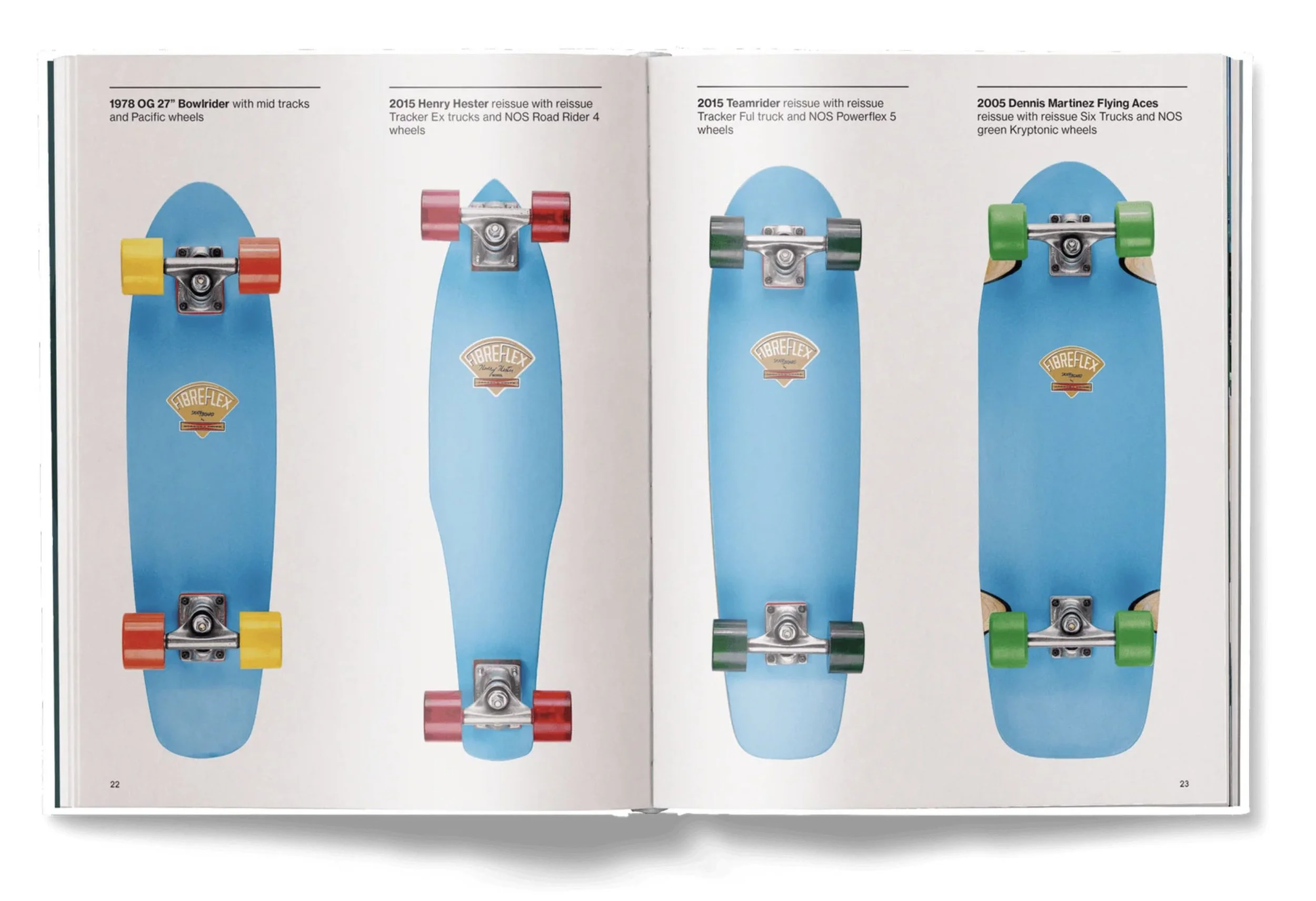
Credit: From the book FLEX APPEAL - THE CHANGING FACE OF '70S SKATEBOARD CULTURE
What Flex Appeal?
The book that documents Ytterborn's collection alongside Warren Bolster's photography from the same era…captures is a record of that formation. Not a retrospective. Not a case study in what worked. A document of something being made, in the moment of its making.
Bolster's photographs don't read like documentation. They read like participation. There's a difference between a photographer who records a scene and one who understands what the scene is trying to become. The images sit alongside Ytterborn's boards and the effect is accumulative…two parallel forms of witness, arriving at the same conclusion from different directions.
“There’s a difference between a photographer who records a scene and one who understands what the scene is trying to become.”
This is what serious archival work does. It doesn't just preserve…it reveals the logic that existed before the outcome made it obvious. The boards, lined up in sequence, show you how the thinking evolved. How a product changed as the culture around it changed. How identity gets built iteratively, without announcement, through the accumulation of decisions that might look incidental in isolation.
Most of those decisions were invisible at the time. Not invisible in the sense of hidden — in the sense of not yet legible. The culture hadn't developed the language to describe what it was doing. The brands operating within it were working on instinct, on proximity, on the kind of knowledge that comes from being genuinely embedded in something rather than observing it from the outside.
There's a version of brand history that runs like this: culture forms, market emerges, brands enter, category consolidates. The interesting thing about skateboarding in the 1970s — and about Fibreflex specifically…is that the brand was never downstream of the culture. It was inside it. Fibreflex wasn't responding to what skateboarding was becoming; it was participating in the becoming.
That position is nearly impossible to manufacture after the fact. You can't reverse-engineer genuine participation. You can study it, document it, learn from it…which is precisely what the Flex Appeal project is doing…but the conditions that produced it were specific to a moment when nobody had yet decided what success looked like.
“The culture hadn’t developed the language to describe what it was doing.”
The boards stopped in 1979. By then, skateboarding was approaching the threshold of mainstream legibility. Magazines, competitions, shoe deals…the infrastructure of a proper industry was forming. What Fibreflex had done in the years before that threshold is what makes the collection worth keeping, and worth looking at now.
The lesson isn't that you should ignore the mainstream. It's that the work done before anyone is watching tends to have a quality the work done for an audience rarely does. There's a directness to it. A specificity. An absence of the self-consciousness that comes with knowing you're being observed.
Ytterborn kept every board. That alone tells you something about what he understood, even then, about the difference between what was happening and what was merely visible.
You can get your hands on a copy here.
Fibreflex wasn't alone in this. The same logic runs through the early years of Stüssy, Palace, and Rip Curl — brands that formed their identity before they had an audience to perform it for.
Stüssy is the most interesting parallel to Fibreflex though. Shawn Stussy's signature scrawl and fusion of cultural influences showed that a "surf" brand could be so much more, paving the way for streetwear. He was making boards and printing his signature on t-shirts to sell at the same time. No strategy — just embedded participation.
Palace a similar structure, London skate origin, same pre-mainstream coherence. The humour, the graphics, the anti-aspirational tone were all formed before the brand had any reason to perform them.

Rip Curl started making surfboards in Australia before anyone was thinking about brand. They moved into specialised wetsuits built for actual surfing conditions…pure function, no audience. The identity formed around the product problem, not a market opportunity.
