
Is It the End of Choosing One Brand Architecture?
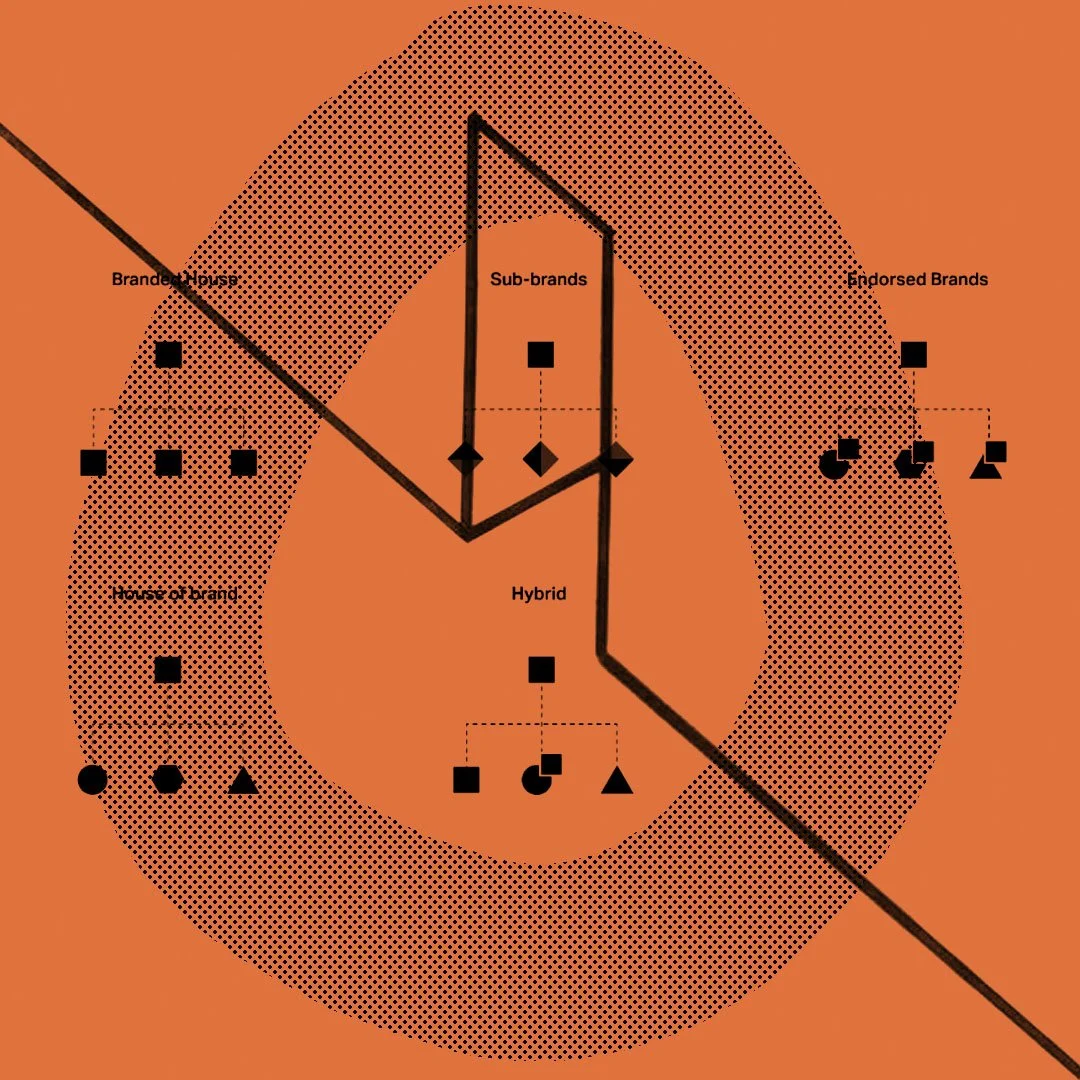
Brand architecture used to be a structural decision. Something defined by org charts, divisions and reporting lines. Today it behaves more like a growth tool, less about hierarchy, more about how brands move, test and speak to different audiences.
So…what has actually changed?…It is simple.
Today, brand architecture is the structure behind a business. The way the master brand, sub brands, products and services relate to each other. It defines what connects, what stands apart and how everything is understood.
Before
Architecture was about corporate structure
Now
Architecture is about audience separation and speed
Before
You chose one model
Now
Most businesses operate across two or three at once
Before
Architecture was fixed
Now
Architecture is flexible
This shift is being driven by a few very real changes.
First, product cycles are shorter. Businesses are launching new offers constantly. Different price points, different audiences, different positioning. One master brand starts to stretch too far, so new names or sub brands appear to create clarity.
Second, audiences are fragmented. A single company might be speaking to investors, premium buyers, first home buyers, digital audiences and retail customers all at once. Architecture becomes a way to separate tone, messaging and expectation.
“Brand architecture is becoming more important, just less rigid.”
Third, risk is managed differently. Testing something bold under a core brand can create tension. A separate brand creates freedom. It allows experimentation without disrupting the main reputation.
Fourth, digital has lowered the cost of creating brands. What once required packaging, signage and media spend can now launch with a name, a landing page and a social handle. This naturally increases multi brand behaviour.
Fifth, growth is no longer linear. Businesses expand sideways, not just up. New categories, partnerships, drops, limited releases.
A single structure struggles to hold that. Flexible architecture handles it better.
The result is not the end of brand architecture. It is the opposite. Architecture is becoming more important, just less rigid.
Most modern businesses are now part branded house, part sub brand system, part house of brands. The real strategy is no longer choosing one model. It is deciding where to connect and where to separate.
