
The Death of the Middle: Branding in the Age of Horseshoe Maximalism
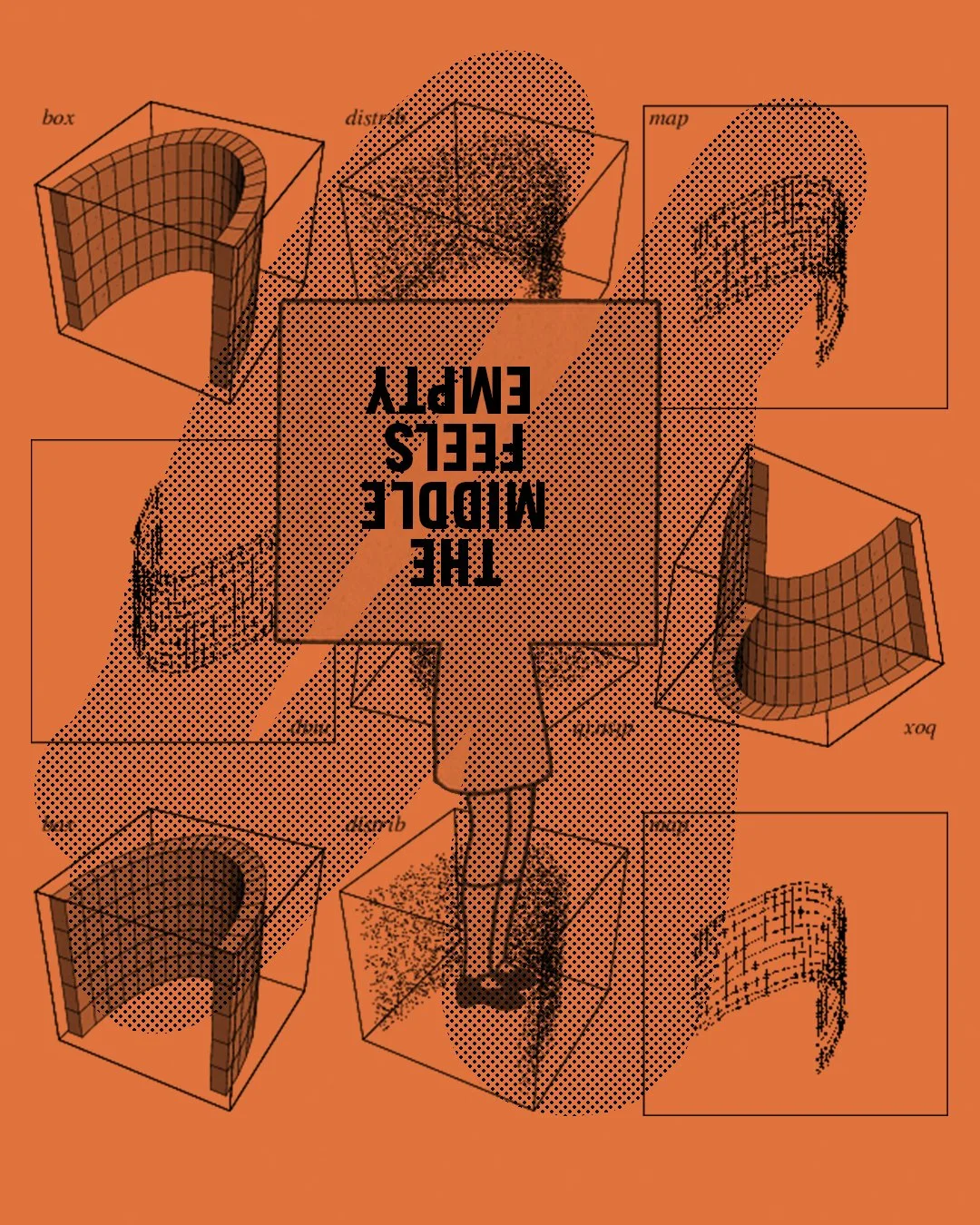
We’re living in an age where contradiction no longer cancels itself out...it compounds. What once felt like ideological opposites now curve toward each other, forming a strange, volatile symmetry.
This is Horseshoe Maximalism: a cultural logic where extremities reject the centre, yet increasingly resemble one another in tone, intensity, and conviction.
In this space, opportunity emerges not from balance, but from friction. Polarisation isn’t just political or social anymore, it’s aesthetic, emotional, and brand-driven. Minimalism versus maximalism. Heritage versus acceleration. Nature versus machine. Human authorship versus automation. The middle ground, once the safe territory of consensus, now feels impotent...too slow, too polite, too compromised to shape belief.
The old mechanisms for reform - Institutions, legacy media and top-down narratives struggle to hold authority in a culture that rewards immediacy and absolutism. Meaning is no longer negotiated patiently; it’s declared loudly. And brands, whether they intend to or not, are becoming the primary storytellers in this vacuum.
Horseshoe Maximalism isn’t about choosing sides. It’s about recognising that cultural power now lives at the edges...where ideas are clearer, identities are sharper, and symbolism is amplified. These edges collapse inward, forming new hybrids: hyper-traditional futurism, soft tech spirituality, luxury activism, nostalgic radicalism. The contradictions aren’t bugs, they’re the feature.
“The question is no longer “How do we appeal to everyone?” but “What belief system are we brave enough to articulate?”
This places brands at a crossroads. Neutrality no longer reads as stability; it reads as absence. To stand for nothing is to be invisible. The question is no longer “How do we appeal to everyone?” but “What belief system are we brave enough to articulate?”
What we’re missing isn’t innovation, it’s mythology. Shared stories that help us orient ourselves in a fragmented future. Narratives that feel authored, intentional, and human. A new pantheon of symbols, values, and rituals that give people something to gather around, not in agreement, but in direction.
So the real challenge for brands now isn’t differentiation, it’s authorship.
What future are you quietly normalising through your language, your visuals, your systems? What contradictions are you willing to hold without flattening them? And how do you invite participation without dissolving conviction?
Horseshoe Maximalism asks brands to stop pretending the centre will hold and instead design meaning at the edges, where culture is actually being written.
The future won’t be built by consensus alone. It will be built by the stories we choose to believe inmand the ones we have the courage to tell.
A Brand Framework for the Age of Horseshoe Maximalism
If Horseshoe Maximalism names the pattern, this framework translates it into practice. Not as tactics, but as a way for brands to move from neutrality to authorship in a polarised cultural landscape.
Belief
Every brand must now begin with a belief that is felt, not optimised. In a polarised culture, beliefs aren’t polite mission statements, they’re convictions about how the world should work. This belief should be non-obvious, human-authored, and slightly uncomfortable. If it can be universally agreed upon, it’s not a belief, it’s hygiene. Belief is the internal gravity that pulls everything else into alignment.
Tension
Belief only becomes powerful when placed under strain. Horseshoe Maximalism thrives on contradiction, so brands should resist resolving their tensions too neatly. Tradition versus progress. Scale versus intimacy. Technology versus tactility. These tensions shouldn’t be explained away, they should be designed into the brand. Tension creates energy, memorability, and relevance at the cultural edges.
Myth
When belief and tension are sustained over time, they form myth. Myth is the story a brand tells itself and invites others to believe in. Not advertising narratives, but origin stories, rituals, and futures that feel inevitable rather than invented. In a post-institutional world, brands are becoming cultural myth-makers, offering orientation where old authorities no longer persuade.
Symbol
Myths only travel when they’re made visible. Symbols are the compression layer - visual, verbal, spatial, behavioural. Logos, artefacts, language systems, products, gestures. In an era of extremity, symbols must be bold enough to be misinterpreted. If a symbol can’t polarise, it can’t rally. Recognition now comes from clarity, not consensus.
The Shift
Horseshoe Maximalism doesn’t ask brands to be louder — it asks them to be truer. To move from neutrality to authorship. From positioning to belief. From campaigns to culture. The brands that endure won’t sit in the middle waiting for permission. They’ll build meaning at the edges — and let the world curve toward them.
